

Losing a tooth can affect much more than the appearance of your smile. It can make chewing uncomfortable, affect the way you speak, and sometimes make you feel less confident. Fortunately, modern dentistry offers several ways to replace missing teeth.
Two commonly recommended options are dental implants and dental bridges. Both can restore the appearance and function of your smile, but they work in very different ways. So, how do you decide which one is right for you?
If you’re considering a Dental Implant in Rani Bagh, understanding how implants compare with bridges can help you have a more informed conversation with your dentist.
What Is a Dental Implant?
Table of Contents
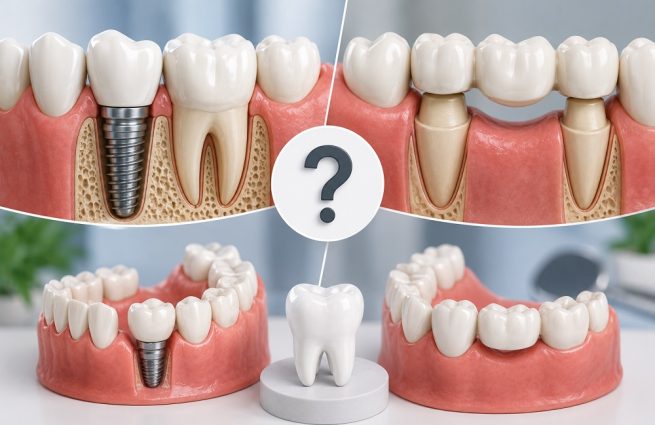
A dental implant is a tooth replacement option that is designed to replace both the missing tooth and its root.
A small titanium implant is placed into the jawbone, where it gradually integrates with the surrounding bone. Once healing is complete, an artificial tooth, known as a crown, is attached to the implant.
One of the biggest advantages of a Dental Implant in Rani Bagh is that it does not rely on neighboring teeth for support. It functions more like a natural tooth and can provide a stable solution for replacing a missing tooth.
What Is a Dental Bridge?
A dental bridge replaces a missing tooth by using the teeth next to the gap for support. The replacement tooth, known as a pontic, is connected to crowns or other supporting structures placed on the neighboring teeth.
A Dental Bridge in Pitampura can be a practical option for people who want to replace a missing tooth without undergoing implant surgery.
Bridges can often be completed in less time than implants, although the exact treatment timeline depends on the condition of your teeth and gums.
Dental Implant vs Dental Bridge: The Main Difference
The biggest difference between these treatments is how they are supported.
A dental implant is anchored directly into the jawbone, while a bridge is supported by adjacent teeth.
Here’s a simple comparison:
| Feature | Dental Implant | Dental Bridge |
|---|---|---|
| Support | Jawbone | Neighboring teeth |
| Replaces tooth root | Yes | No |
| Treatment time | Usually longer | Usually shorter |
| Surgery | Required | Usually not required |
| Effect on neighboring teeth | Usually minimal | Supporting teeth may need preparation |
| Bone preservation | Helps maintain bone stimulation | Does not replace the root |
| Maintenance | Similar to natural teeth with additional care | Requires careful cleaning around the bridge |
Your dentist will consider your oral health, preferences, budget, and long-term goals before recommending an option.
Benefits of Dental Implants
1. A More Natural Feel
Dental implants are designed to become integrated with the jawbone. Once healed, they can feel more stable than removable tooth replacement options.
2. No Need to Support the Implant With Neighboring Teeth
Unlike a traditional bridge, an implant does not require the adjacent teeth to act as supports.
This can be particularly appealing if the neighboring teeth are healthy.
3. Helps Maintain Jawbone Structure
When a tooth is lost, the bone in that area can gradually shrink because it no longer receives stimulation from a natural tooth root.
Because an implant replaces the root portion, it can help provide stimulation to the surrounding bone.
4. Long-Term Solution
With proper oral hygiene, regular dental care, and good lifestyle habits, dental implants can provide a long-lasting tooth replacement solution.
If you’re considering a Dental Implant in Rani Bagh, your dentist can assess your bone health and overall oral condition to determine whether you’re a suitable candidate.
Benefits of Dental Bridges
1. Generally Faster Treatment
One advantage of a Dental Bridge in Pitampura is that treatment can often be completed more quickly than an implant, particularly because implants require a healing period.
However, treatment time varies depending on the individual case.
2. No Implant Surgery
A traditional dental bridge does not require an implant to be surgically placed into the jawbone.
For patients who are unable or unwilling to undergo implant surgery, a bridge may be worth discussing with their dentist.
3. Restores Your Smile
A well-designed bridge can fill the visible gap created by a missing tooth and help restore the appearance of your smile.
4. Can Improve Chewing
Replacing a missing tooth can make eating more comfortable and help distribute chewing forces more effectively.
Which Option Is More Comfortable?
Both treatments can be comfortable once the treatment has been completed and the mouth has adjusted.
Implant placement involves a surgical procedure, so some temporary soreness or swelling can occur during the healing period. A bridge generally involves less invasive treatment.
However, comfort isn’t the only factor to consider. The long-term health of your teeth and gums should also be part of the decision.
Which One Lasts Longer?
The lifespan of either treatment depends on several factors, including oral hygiene, bite forces, lifestyle habits, the condition of surrounding teeth, and regular dental visits.
Dental implants can have excellent long-term success when properly planned and maintained. Bridges can also last for many years with appropriate care.
Rather than focusing only on how long a treatment may last, consider how well it fits your overall oral health and long-term needs.
Is a Dental Implant Always Better Than a Bridge?
Not necessarily.
A Dental Implant in Rani Bagh may be an excellent option for someone with adequate bone support, healthy gums, and a desire for a long-term tooth replacement that does not rely on neighboring teeth.
However, a bridge may be more appropriate for someone who wants a faster treatment or has circumstances that make implant treatment less suitable.
There is no single solution that is best for every patient.
When Might a Dental Bridge Be a Better Choice?
A Dental Bridge in Pitampura may be worth considering when:
- You want a relatively quick tooth replacement option.
- The neighboring teeth are strong enough to support a bridge.
- You prefer to avoid implant surgery.
- You have certain medical or dental factors that make implants less suitable.
- You want to restore the appearance and function of your smile without a lengthy treatment process.
Your dentist can examine your teeth and explain whether a bridge is appropriate for your situation.
What About the Cost?
Cost is naturally an important consideration when choosing between a dental implant and bridge.
The final cost can vary based on factors such as:
- Number of teeth being replaced
- Materials used
- Condition of your gums and teeth
- Need for additional procedures
- Complexity of the treatment
- Dentist’s experience
- Laboratory and restoration costs
Although implants can have a higher initial cost, their long-term benefits may make them worthwhile for some patients. Bridges may have a lower upfront cost but may require replacement or maintenance over time.
Rather than choosing solely based on price, discuss the expected benefits, limitations, maintenance, and longevity of each option with your dentist.
How Do You Care for a Dental Implant?
Once your implant treatment is complete, maintaining good oral hygiene is essential.
You should:
- Brush twice a day.
- Clean between your teeth regularly.
- Follow your dentist’s instructions.
- Avoid using your teeth to open packages or bite hard objects.
- Attend regular dental checkups.
- Report any unusual discomfort or looseness.
Although implants cannot develop cavities like natural teeth, the surrounding gums and tissues still need proper care.
How Do You Care for a Dental Bridge?
Bridges also require consistent cleaning.
Food particles and plaque can collect around and underneath the bridge, so cleaning these areas carefully is important.
Your dentist may recommend floss threaders, interdental brushes, or other cleaning aids depending on your bridge.
If you have chosen a Dental Bridge in Pitampura, following a proper cleaning routine can help protect both the bridge and the natural teeth supporting it.
Which Option Is Right for You?
The decision between an implant and a bridge should be based on your individual dental condition rather than simply choosing the treatment that seems more convenient.
Your dentist may consider:
- The health of your gums
- The condition of neighboring teeth
- Available jawbone
- Your bite
- Your overall oral health
- Your treatment preferences
- Your budget
- How quickly you want the missing tooth replaced
A thorough dental examination can help you understand your choices and their potential benefits and limitations.
Final Thoughts
Both dental implants and bridges can be effective ways to replace missing teeth, but each option has its own advantages.
A dental implant replaces the missing tooth and its root and generally offers a stable, long-term solution. A dental bridge can provide a quicker alternative by using neighboring teeth for support.
If you’re considering a Dental Implant in Rani Bagh, speak with a qualified dentist about whether your teeth, gums, and jawbone are suitable for the procedure.
Likewise, if you’re exploring a Dental Bridge in Pitampura, a professional evaluation can help determine whether a bridge is the right choice for your smile.
Ultimately, the best treatment is the one that fits your oral health, lifestyle, expectations, and long-term dental goals. A personalized consultation is the best way to make that decision with confidence.